Here are the last ten books from my bookshelf along with a brief overview of how I use them in the Art room. As I've mention in previous post, I most often use these books with my Kindergarten classes. The books I commonly use with older students are more artist specific such as the
Getting to Know the Worlds Greatest Artist series by
Mike Venezia. I have included a few older student books in this list as well.
 Action Jackson
 by
Jan Greenberg is one of older student books. This is a biographical story that I use to introduce the artist and his life to students. Elementary students love the idea of painting like Jackson Pollock, just be prepared and organized so splatter painting doesn't go wild!

How is a budding young artist suppose to cope when Mom takes away her crayons? This is the story line in the book
A Day with no Crayons by Elizabeth Rusch. This is a cute tale that I do use with younger students. I do not incorporate a specific lesson plan to this book but use it more to stress creativity and also the proper use of materials. It's a cute little book.

 Kathryn Otoshi
 has written a poignant little tale about difference and importance in her book,
One. As the colors argue about their importance, one comes into the picture and helps everyone to see that they all count. It's a great book to use if you are having difficulty with name calling or students not getting along. I try to squeeze a few books into my library on this subject. Teaching social skills is so important in school and test focus leaves little time to help youngster work on those skills. Books like this can create an opportunity for dialogue, even in the Art room. It could be used to introduce a cooperative project or to just set the proper mood and expectations for the Art room.

My sister purchased the next two books for me late in the school year last year. I read them both to students and the discussion led to creative imagination and the empowerment of creativity. They are great books and can be found free on several book sites to download to you computer.
Antoinette Portis is the author of
Not A Box and
Not a Stick.

Another creative inspiration book is
Ish by
Peter Reynolds. The story line is that Art doesn't have to be perfectly realistic and can be treasured for what it is, regardless how "ish". There is also a wonderful video to accompany this book. Many of Peter Reynolds books can be found on those free download sites for classroom use as well as on youtube.


I generally introduce 2nd grade students to Georgia O'Keefe as a spring lesson. I have done this lesson in a few different ways over the years but I think my favorite lesson was one inspired by an overabundant supply of felt squares. Students chose a colored square and oil pastels are used to create an O'Keefe flower large enough to fill the 12" x 12" square. The book I use to share her biography is by
Jen Bryant and titled
Georgia's Bones. A friend has a real skull that she uses and has student's draw a skull for this lesson. I also use the book
Through Georgia's Eyes by
Julie Paschkis. A third O'Keefe title is
Georgia O'Keefe: The Artist in the Desert - Adventures in Art from Prestel Press. This book includes wonderful photographs of the artist along with some great prints of her work. It is more biographical in nature for her later years of life.
Prestel Press

Lastly, and by no means last in importance, is
Harold and the Purple Crayon by
Crockett Johnson. This book has withstood the test of time and still remains relevant and entertaining for young students. Scholastic has a wonder video of the story and numerous online resources are available for downloading the book to your computer. I like using Harold with Kindergarten students anytime during the year but it is especially good when introducing line and how line makes shape.
The following is a list of newly acquired books that I have not incorporated into lesson plans as of yet but am currently working on.
The Art of Silliness by
Carla Sonheim
A Splash of Red the life and art of Horace Pippin by Jen Bryant
Colorful Dreamer the Story of Artist Henri Matisse by Marjorie Blain Parker
Sky Color by Peter Reynolds
Magritte's Marvelous Hat by D.B. Johnson
Andrew Drew and Drew by Barney Saltzberg
Anholt's Artist Activity Book by Laurence Anholt
One of my goals for the remainder of Spring Break is to create lessons using at least two of these books. Wish me luck!!!


 One of my buildings always puts on a school dance around this time of the year where the teachers work to raise money for the PTA. The theme for this year was Fiesta. Art students create the decorations for the dance. Fourth grades students created patterns in lively colors on white paper that had been cut into 9 x 4.5 sheets. I had envisioned them as the skirts for Senoritas but once the papers were accordion folded; they didn't quite measure up in size. The folds immediately brought to mind the beautiful fans Senoritas waved as they danced and the work took it's own life. The fans made beautiful decorations. The lesson incorporated math with the patterns along with an exposure to the culture of Cinco de Mayo with vibrant color and dance.


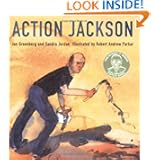 Action Jackson by Jan Greenberg is one of older student books. This is a biographical story that I use to introduce the artist and his life to students. Elementary students love the idea of painting like Jackson Pollock, just be prepared and organized so splatter painting doesn't go wild!
 How is a budding young artist suppose to cope when Mom takes away her crayons? This is the story line in the book A Day with no Crayons by Elizabeth Rusch. This is a cute tale that I do use with younger students. I do not incorporate a specific lesson plan to this book but use it more to stress creativity and also the proper use of materials. It's a cute little book.
 Kathryn Otoshi has written a poignant little tale about difference and importance in her book, One. As the colors argue about their importance, one comes into the picture and helps everyone to see that they all count. It's a great book to use if you are having difficulty with name calling or students not getting along. I try to squeeze a few books into my library on this subject. Teaching social skills is so important in school and test focus leaves little time to help youngster work on those skills. Books like this can create an opportunity for dialogue, even in the Art room. It could be used to introduce a cooperative project or to just set the proper mood and expectations for the Art room.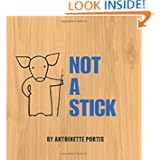
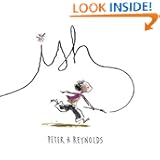 Another creative inspiration book is Ish by Peter Reynolds. The story line is that Art doesn't have to be perfectly realistic and can be treasured for what it is, regardless how "ish". There is also a wonderful video to accompany this book. Many of Peter Reynolds books can be found on those free download sites for classroom use as well as on youtube.

 I generally introduce 2nd grade students to Georgia O'Keefe as a spring lesson. I have done this lesson in a few different ways over the years but I think my favorite lesson was one inspired by an overabundant supply of felt squares. Students chose a colored square and oil pastels are used to create an O'Keefe flower large enough to fill the 12" x 12" square. The book I use to share her biography is by Jen Bryant and titled Georgia's Bones. A friend has a real skull that she uses and has student's draw a skull for this lesson. I also use the book Through Georgia's Eyes by Julie Paschkis. A third O'Keefe title is Georgia O'Keefe: The Artist in the Desert - Adventures in Art from Prestel Press. This book includes wonderful photographs of the artist along with some great prints of her work. It is more biographical in nature for her later years of life. Prestel Press
 Lastly, and by no means last in importance, is Harold and the Purple Crayon by Crockett Johnson. This book has withstood the test of time and still remains relevant and entertaining for young students. Scholastic has a wonder video of the story and numerous online resources are available for downloading the book to your computer. I like using Harold with Kindergarten students anytime during the year but it is especially good when introducing line and how line makes shape.


