Showing posts with label literacy in art. Show all posts

Saturday, March 17, 2018

Kindergarten and Andy Warhol's Cats

This was a delightful read for my Kinders who speculated that the Warhol's must have had at least 1000 Sam's living in their home.  They were hysterical with the idea that Hester and Sam might have slept in Andy's wig drawer with all their offspring's and they were sure the wigs must have been an extremely comfortable place to sleep.

So began a Kindergarten lesson on Pop Art, no it's not like popping a balloon, and an introduction to Andy Warhol.

Students followed a directed draw to create this sweet little composition featuring a cat in a wig and sometimes with a smaller Sam (kitten) in the background.  Students were encouraged to practice skill and creative embellishment in their work.  Choices in color for the cats were left up to the student's discretion.  Here are a few of the finished projects, definitely worth sharing!!!


Wednesday, January 15, 2014

Elephant Patterns

Here are a few of the pattern elephants from my lesson plan post last week.   As a follow-up, I need to share that the cutting was a bit challenging for them.  I quickly drew the cut lines on the reverse side of each of the grids to make it clearer for most of my classes.  One class did not require the added assistance, however, it was a small class due to many students being out with illness.   I was able to walk around and work individually with students in the smaller class to help them achieve cutting success.  The next step in the process will be to draw and color an elephant on a separate sheet of white paper.  I intend to do a "follow the leader" draw using shapes to create the drawn elephant.  It will be colored gray to represent Elmer in the Elmer's Day Parade.   Students will then complete a composition that will be their interpretation of an elephant habitat.   This could be the jungle, watering hole, a zoo, etc.   After the habitat is completed, the patterned elephants will be glued into the composition.  I think these will be really cute and I will definitely be sharing the completed ones.  Check back for the update!

LOVE this new book

Have you found this book yet?  I am developing a project on pictographs and thought this would be a good supplement read when I found it on Amazon.  It is a really great book.  Here is a brief overview:  a young boy sees things that others can not see.  He imagines animals in the shapes of clouds and in the bumps and crevices of his cave walls.  No one else seems to see the world as he does.  He begins to draw on the cave walls of his home to help others see as he sees.
 I plan to use it for a Native American unit but it could just as easily work for something about the Caves of  Lascaux.  I can't wait to share this one with my students.

Tuesday, July 30, 2013

Two new books for use in Kindergarten

If you haven't read the book Lacey Walker, Nonstop Talker, you must check your local bookstore or library for a copy.  I can't wait to read this charming little picture book to my classes when the school year begins.   I always like to let my students talk quietly while they create if they wish but for some students,  they can't seem to regulate their talking.  This little book tells the story of Lacey Walker who loses her voice and discovers all she has been missing out on with her non-stop talking!  I absolutely am charmed by the story.  It is written by Christianne Jones and illustrated by Richard Watson.

The second new book for the fall is The Day the Crayons Quit by Drew Daywalt and illustrated by Oliver Jeffers.  If you are not familiar with Jeffers, you will recognize his art from other books you have probably used in your classroom.  You can learn more about him here.  This picture book tells of the frustration experienced by a box of crayons over the way their owner uses them.  Some feel overused, some under used and others limited in what they are allowed to color.    I recommend both to you for your classroom collection.  It has been selected by Amazon as one of the Best Children's Books of the Year.

Wednesday, May 22, 2013

Recycling old books

I am always on the lookout for ways to incorporate recycled papers into student work. It is very appealing to me personally to incorporate what is being thrown out into something refreshed and new. When the librarian recently cleaned out shelves and placed some books in boxes for students to take I knew I might have found the idea for a new project.  I selected four of the discarded books that were easy reads with little illustrations.  I primarily picked up books of poetry.  After disassembling the books with my handy dandy exacto knife, I was left with some great illustrated hardback covers and piles of pages just waiting to be chosen for a new project. I'm saving the hardback covers for another project to be determined!

Here was my inspiration.  I have been recently following the works of a watercolor artist from Oklahoma who uses dictionaries for her art papers.   They really speak to me and I know I will purchase one of her prints for my own soon. You can check her blog, flying shoes art studio, here.  She chooses subject matter based on a word from the page.   I knew I could probably do something similar with my book pages and fourth grade students.

I allowed each student to select a page of their choice.  Yes, they had to read some poetry first and decide what was most appealing to them personally.  Then, they were challenged to illustrate over the words with their drawings being driven by the passages they had read.  I'm please with the way they have approached the challenge and most seemed to really enjoy the opportunity to draw on a page of a book.    Here are some finished works.


Friday, April 19, 2013

Discovering Horace Pippin and the National Gallery of Art

I recently purchased a book about Horace Pippin by Jen Bryant. The book is A Splash of Red.   It's a nice little biographical book chronicling his discovery of a love for creating art and how it carried through his life.  I was not terribly familiar with Pippin so started googling for more information.  I discovered a wonderful website, NGA Classroom.   I found a terrific biography, photos of his work as well as lesson and connections.  I've added a permanent link on the right side of this blog.  RIght now I think I will approach this lesson with a focus on folk art and reading a picture.  I am eager to introduce students to a new artist as well.


Thursday, April 18, 2013

Books from the bookshelf - final installment (for now!)

Here are the last ten books from my bookshelf along with a brief overview of how I use them in the Art room.  As I've mention in previous post, I most often use these books with my Kindergarten classes.  The books I commonly use with older students are more artist specific such as the Getting to Know the Worlds Greatest Artist series by Mike Venezia.  I have included a few older student books in this list as well.

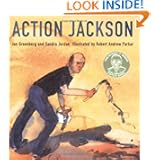
Action Jackson by Jan Greenberg is one of older student books.  This is a biographical story that I use to introduce the artist and his life to students.  Elementary students love the idea of painting like Jackson Pollock, just be prepared and organized so splatter painting doesn't go wild!


How is a budding young artist suppose to cope when Mom takes away her crayons?  This is the story line in the book A Day with no Crayons by Elizabeth Rusch.  This is a cute tale that I do use with younger students.  I do not incorporate a specific lesson plan to this book but use it more to stress creativity and also the proper use of materials.  It's a cute little book.


Kathryn Otoshi has written a poignant little tale about difference and importance in her book, One.  As the colors argue about their importance, one comes into the picture and helps everyone to see that they all count.  It's a great book to use if you are having difficulty with name calling or students not getting along.  I try to squeeze a few books into my library on this subject.  Teaching social skills is so important in school and test focus leaves little time to help youngster work on those skills.  Books like this can create an opportunity for dialogue, even in the Art room.  It could be used to introduce a cooperative project or to just set the proper mood and expectations for the Art room.

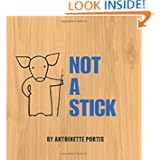
My sister purchased the next two books for me late in the school year last year.  I read them both to students and the discussion led to creative imagination and the empowerment of creativity.  They are great books and can be found free on several book sites to download to you computer.  Antoinette Portis is the author of Not A Box and Not a Stick.

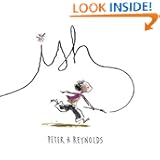
Another creative inspiration book is Ish by Peter Reynolds.  The story line is that Art doesn't have to be perfectly realistic and can be treasured for what it is, regardless how "ish".  There is also a wonderful video to accompany this book.  Many of Peter Reynolds books can be found on those free download sites for classroom use as well as on youtube.


I generally introduce 2nd grade students to Georgia O'Keefe as a spring lesson.  I have done this lesson in a few different ways over the years but I think my favorite lesson was one inspired by an overabundant supply of felt squares.  Students chose a colored square and oil pastels are used to create an O'Keefe flower large enough to fill the 12" x 12" square.  The book I use to share her biography is by Jen Bryant and titled Georgia's Bones.  A friend has a real skull that she uses and has student's draw a skull for this lesson.  I also use the book Through Georgia's Eyes by  Julie Paschkis. A third O'Keefe title is Georgia O'Keefe: The Artist in the Desert - Adventures in Art from Prestel Press.  This book includes wonderful photographs of the artist along with some great prints of her work.  It is more biographical in nature for her later years of life.   Prestel Press


Lastly, and by no means last in importance, is Harold and the Purple Crayon by Crockett Johnson.  This book has withstood the test of time and still remains relevant and entertaining for young students. Scholastic has a wonder video of the story and numerous online resources are available for downloading the book to your computer.  I like using Harold with Kindergarten students anytime during the year but it is especially good when introducing line and how line makes shape.


The following is a list of newly acquired books that I have not incorporated into lesson plans as of yet but am currently working on.

The Art of Silliness by Carla Sonheim
A Splash of Red the life and art of Horace Pippin by Jen Bryant
Colorful Dreamer the Story of Artist Henri Matisse by Marjorie Blain Parker
Sky Color by Peter Reynolds
Magritte's Marvelous Hat by D.B. Johnson
Andrew Drew and Drew by Barney Saltzberg
Anholt's Artist Activity Book by Laurence Anholt

One of my goals for the remainder of Spring Break is to create lessons using at least two of these books.  Wish me luck!!!


Tuesday, April 16, 2013

Back to the bookshelf

A Tree for all Seasons by Robin Bernard  I use this book with Kinder students as they study trees in early spring.  It is a simple project and also the first time I use markers with Kindergarten students.  Following along, they color a wide vertical rectangle near the center of their paper using a brown marker.  From the top of the rectangle thinner branches of a "Y" are formed.  This process continues as the tree grows taller and taller by added the "y" at the end of each new branch.  Leaves can be added with paint and fingertips or with Q-tips to complete the tree.  I make certain to stress the importance of and add the horizon line. Students are then  left to complete the composition making their own choices so that individual creativity                   occurs.

Next on my list is Purple, Green and Yellow by Robert Munsch.  I think this is one of my favorite all time books and I love to read it out loud to students pausing at the appropriate times to stress events and wait for their reactions.   It is such a fun book.  I generally use this with Kinders but often will read it to all the younger grades in the same day because it is so enjoyable.  I don't always have a lesson that directly relates to the reading of the book and will use it for a reading in day two of a project.  I would count this as one of my "must have" books and actually have two copies, one for each building!

Little Blue and Little Yellow by Leo Lioni is a sweet little book about two friends that mix together and form the color green.  They are unrecognizable by their families until everyone discovers they have mixed.  I introduce this book along with many others as Kindergarten students work with color mixing.  It is great for reinforcing colors.  Most kinders have mastered this by the third quarter of the year but some still are struggling.


Another color mixing choice is the book The Color Kittens by Margaret Wise Brown.  I grew up with this book and loved it as a young child.  It was always one of my favorites and I present to the Kinders with that information.  As an adult there are parts of the book that I find a bit irrelevant and wish they had been left out, for instance when the kittens go to sleep and they dream, but I share the book in its entirety  as written.


As you can tell, most of my literature connections are for Kindergarten.  The 45 minute class time is too long to expect them to remain engaged in a project so I begin all my lessons on the carpet with a book and then transition to tables for the project.  Clean-up is completed with a movement song as they prepare to transition back to their home classrooms.  I am always on the lookout for new books for Kindergarten.

Here is the one I use when introducing Texture: Feely Bugs by David Carter.  This book belonged to my grown daughter and has definitely seen wear and tear but is still functional.  It is interactive so I generally read each page and invite a great listener to come up and touch the bug and report back to the rest of the group their interpretation of what it feels like.  For the project, I use model magic and students discover the texture on the bottom of their shoes.  These could be made into pendants with a small hole into the top to string them or a magnet by attaching a magnet to the back with adhesive.   I have done the magnets for years.  Week two, after the model magic has hardened, they are colored with markers or watercolored.  I share with students my hopes that the magnets will proudly display their personal artwork on the home refrigerator.

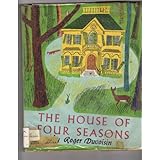
A sculptural house created from a brown lunch bag is the lesson tied to the book A House of Four Seasons by Roger Duvoisin.  This book is about the indecision faced by a family when they attempt to purchase paint for their home.  Everyone in the family has a strong case for the color of their choice and with four family members, there are four color choices.  In the end they reach a compromise that makes everyone happy.


The Pencil by Allan Ahlberg is a fairly new addition to my collection.  I do not have a specific lesson for use with the book but use it as a fun read on a multiple day lesson.  The pencil draws at the command of a young boy.  It must create other art tools to help as it tries to satisfy the wants of the boy.  It is good for introducing medium and uses.


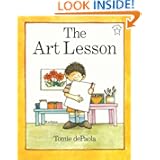
The Art Lesson by Tomie dePaola loosely chronicles  his own experiences in art class as a young child.  This is another great book that does not need to be lesson specific as it is more about the value of the artistic experience.  A historical author review is a must when reading this book.


Carl R. Sams created this wonderful photographic book, Stranger in the Woods.  The Stranger is a snowman left by two lovely giving children who adorn it with fresh food items to feed the winter inhabitants of the woods.  I generally read this during the snowy months of the year to Kinder students.  I often use it with a sponge painting snowman project that is later adorned with real buttons, felt, etc.  I have also used it with a model magic snowman sculpture project for kindergarten.


Just for fun, there is Karen Beaumont's I Ain't Gonna Paint No More!  This could be used with any lesson on painting when you want to stress the importance of using materials as they are intended.


I like all the books by Lucy Micklethwait as I transition to a new element of art with Kindergarten students and often use them to review with older students.  I Spy Colors in Art is no exception.  I use this one with Kindergarten as they begin color mixing.  I want them to see how color is used in art through an exposure to famous works of art.  It is also a subtle lesson in art history.

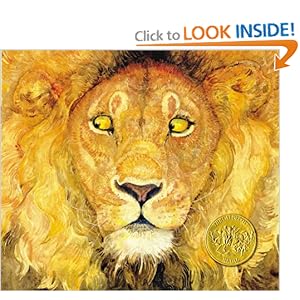
I had the pleasure of meeting Jerry Pinkney at the Norman Rockwell Museum where I received my signed copy of The Lion and the Mouse.  Pinkney has rewritten
 the fables we grew up on and added rich vibrant illustrations.  This book is all about the illustrations for me and I use it to help students read the pictures when the focus in on art telling a story.


The delicate watercolor paintings of Robin Brickman in  Pat Lowery Collins book,  I am an Artist are beautiful.  I inherited this, also signed, copy from a previous teacher.  I understand that Lowery Collins is from Massachusetts and once did a signing in our area.  This book is an affirmation in seeing and creating.  Its a beautiful book suitable for any grade level.

A fun read for cold season is Lisa Kopelke's fun little book Tissue Please.  The project is simple, Kindergarten students create a self portrait on a 12'x24' paper.  I usually have them draw a large oval head on a skin color, cut it out, glue it on a larger colored paper and use pencil and crayon to add eyes, nose, mouth, ears and hair.  Hair could be textural with the use of yarn if time allows.  Then they trace their own hand, cut out and glue it in front of the nose and mouth with a tissue fan-folded underneath.  It is a visual reminder to cover your mouth and nose when you sneeze!

One more book post to follow in a day or two to complete the list of the books on my bookshelf.  I'll add along a few books that I've just purchased and haven't used in the art room, yet

Saturday, March 30, 2013

More books off the shelf

This is the second post of my list of books used in classroom lessons.  Seasonally, I begin with this group of books when school begins after the winter holidays.

"Snowballs" by Lois Ehert is a creative collage book.  Students love to pick out the various details.  I often use this with Kinders.  They sponge paint circles for snowmen on blue construction paper and buttons, felt, googly eyes and various other objects are used to embellish the snowmen.

"Dave the Potter" by Laban Hill.  I use this book to introduce students to a historical value of pottery prior to beginning the winter clay unit.  I typically read it to 1st graders prior to their beginning to construct ugly cups.

Product Details"The Little Indian Pottery Maker" by Ann Nolan Clark is a very old book that I use with my Kinders.  It tells the story of the significance of pottery making to native American families.  It is a cultural passing on of skills.  I am not 100% happy with this narrative because it presents the pottery maker as a women's job and seems a bit gender bias but it is a cute little story and also represents the importance of pottery making in history.  The book is out of print but copies can be obtained on Amazon.
Product Details
"The Valentine Bears" by Eve Bunting.  Hibernating bears generally miss out on celebrating valentine's day with their significant others but in this story,  Mrs. Bear plans a surprise for Mr. Bear.  I use this book with Kinders the week of Valentines Day each year.  I have them cut out hearts to work on cutting skills that I have run off on Red and Pink construction paper.  Bear puppets are assembled using paper bags using the hearts.  I think my original copy master for this project was for a Koala bear.

Product Details
Product Details"One Fish, Two Fish" by Dr. Seuss is the source for a Project with Kinders using watercolor and step by step fish drawing.    I previously posted this project in February 25, 2013 as Dr. Seuss fish by Kinders.

"The Crayon Box that Talked" by Shane DeRolf.  This project is a based on a cooperative lesson about working together which is the theme of the book.  I previously posted that lesson early in the month as Wacky Bird Mural.

Product Details"Flotsam" by Dave Wiesner.  Wiesner's books are full of fabulous illustrations and lack words.  They are always terrific to use if you are trying to teach the concept of a picture telling a story.  I generally use his books with Kinders or 1st graders when I am striving for an illustrative narrative with their work.


Product DetailsProduct Details"The Circus is Coming" by Hilary Knight is a fun book with colorful engaging illustrations.  I posted this lesson recently as Literacy in Art.
I also use "Toulouse Lautrecs The Circus" from Dover Printing and "Circus: Looking at Painting" by Peggy Roalf to accompany this lesson for the visuals.


Product Details

I've seen numerous post with some fantastic ideas for using Leo Lionni "Swimmy".  I recently used this one with first graders for a lesson on creating space in a composition.  I needed visuals of the ocean and fish for the students to draw from.  It is also a terrific little story about working together cooperatively.

Product Details
Fourth graders learn about more current artist for a project incorporating shapes to help them to familiarize with 3D shapes prior to MCAS.  One of those artist is Keith Haring and I love the book I wish I didn't have to sleep  It is a fun interactive experience with Haring's works along with a brief historical biography.  The lesson can be found on my blog as Keith Haring Cubes.
Product Details


With kinders creating circus projects in March, I also bring in A Color Clown Comes to Town by Jane Belk Moncure.  This book is a bit juvenile but the Kinders seem to enjoy it anyway for the predictable outcomes. It's good for color mixing reinforcement.  As I read along, students predict the part of the story where the colors are mixed.  Using shapes, the lesson is about drawing a portrait of a clown.

The list continues but I will do that with another post.  Happy reading, I hope some of these literacy/art connection lesson ideas are helpful to your planning.