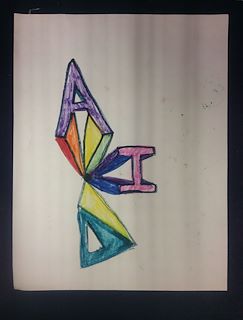
Sol LeWitt inspired 3D sculptures
This is one of my favorite projects and it morphed out of a project on color theory. Each year I have my fourth grade students demonstrate an understanding of Primary, Secondary, Complementary and Analogous color schemes by creating pattern papers. After visiting a Sol LeWitt exhibit at Mass MOCA a few summers ago, I integrated the works of Sol LeWitt into the lesson, sharing with the students LeWitts's ability to create amazing works of art with very
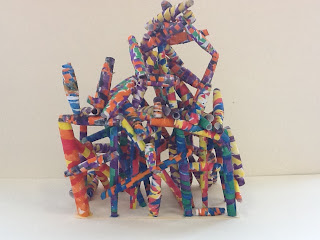
basic color combinations. We study his transitional styles and talk about his integration of math into his work. Lastly, we share the fact that LeWitt creates the ideas for his works but the process is actually completed by other people. The students find that to be a very fascinating fact.
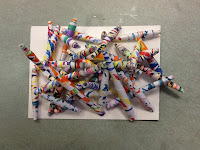

Last year I decided to take the papers and use them to extend the lesson and the sculptures are the end produce. The papers are cut into triangular shapes, I created tracers that are used by my students. The triangles are traced on the back of their paper and then cut apart. Using a wood stylist, the triangles are then rolled into paper beads or tubes. The tubes are then glued to form angles. So we have transgressed back to a math connection with the project. Taking two of the tubes at a time, students glue them to form right angles, acute angles and isolates triangles. Every connection must form an angle. The angles are glued to a poster board base about
4 1/2 x 6". The sculpture is built both up and out with the focus on angle. Anything is acceptable as long as it forms an angle. Here are a variety of the completed projects.
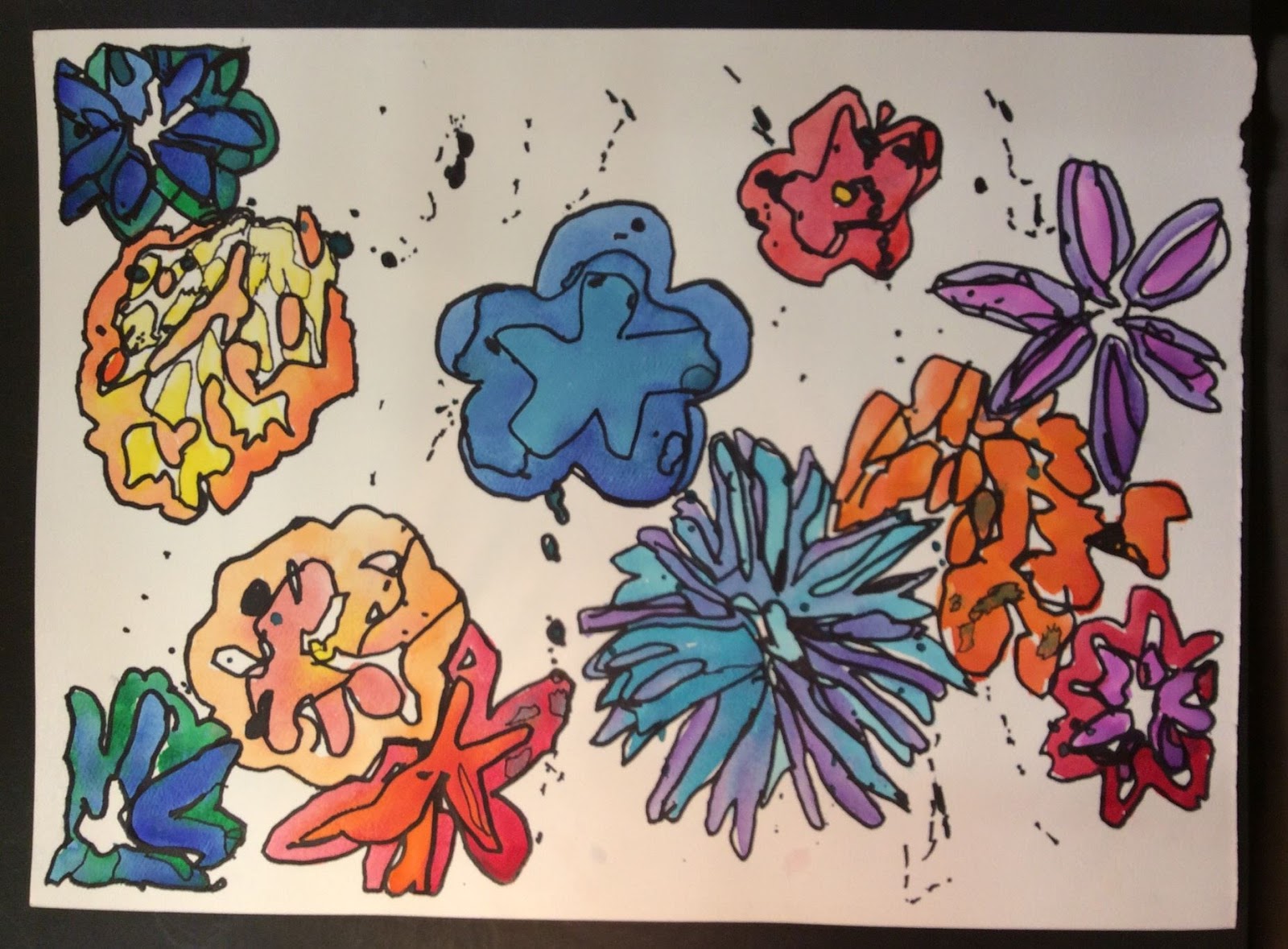 Students painted a visually balance work with a focus on analogous colors. Their flowers were to be recognizable and realistic in nature. Negative space was accentuated through the process of tracing the lines formed by the paint colors. This was to create depth and improve the impact of the design. Thanks go out to Mrs. Kain from Lenox School District for sharing this lesson with teachers at our State Conference this fall.