 A Tree for all Seasons
 by
Robin Bernard I use this book with Kinder students as they study trees in early spring. It is a simple project and also the first time I use markers with Kindergarten students. Following along, they color a wide vertical rectangle near the center of their paper using a brown marker. From the top of the rectangle thinner branches of a "Y" are formed. This process continues as the tree grows taller and taller by added the "y" at the end of each new branch. Leaves can be added with paint and fingertips or with Q-tips to complete the tree. I make certain to stress the importance of and add the horizon line. Students are then left to complete the composition making their own choices so that individual creativity occurs.

Next on my list is
Purple, Green and Yellow by
Robert Munsch. I think this is one of my favorite all time books and I love to read it out loud to students pausing at the appropriate times to stress events and wait for their reactions. It is such a fun book. I generally use this with Kinders but often will read it to all the younger grades in the same day because it is so enjoyable. I don't always have a lesson that directly relates to the reading of the book and will use it for a reading in day two of a project. I would count this as one of my "must have" books and actually have two copies, one for each building!
 Little Blue and Little Yellow
 by
Leo Lioni is a sweet little book about two friends that mix together and form the color green. They are unrecognizable by their families until everyone discovers they have mixed. I introduce this book along with many others as Kindergarten students work with color mixing. It is great for reinforcing colors. Most kinders have mastered this by the third quarter of the year but some still are struggling.

Another color mixing choice is the book
The Color Kittens by
Margaret Wise Brown. I grew up with this book and loved it as a young child. It was always one of my favorites and I present to the Kinders with that information. As an adult there are parts of the book that I find a bit irrelevant and wish they had been left out, for instance when the kittens go to sleep and they dream, but I share the book in its entirety as written.
As you can tell, most of my literature connections are for Kindergarten. The 45 minute class time is too long to expect them to remain engaged in a project so I begin all my lessons on the carpet with a book and then transition to tables for the project. Clean-up is completed with a movement song as they prepare to transition back to their home classrooms. I am always on the lookout for new books for Kindergarten.

Here is the one I use when introducing Texture:
Feely Bugs by
David Carter. This book belonged to my grown daughter and has definitely seen wear and tear but is still functional. It is interactive so I generally read each page and invite a great listener to come up and touch the bug and report back to the rest of the group their interpretation of what it feels like. For the project, I use model magic and students discover the texture on the bottom of their shoes. These could be made into pendants with a small hole into the top to string them or a magnet by attaching a magnet to the back with adhesive. I have done the magnets for years. Week two, after the model magic has hardened, they are colored with markers or watercolored. I share with students my hopes that the magnets will proudly display their personal artwork on the home refrigerator.

A sculptural house created from a brown lunch bag is the lesson tied to the book
A House of Four Seasons by
Roger Duvoisin. This book is about the indecision faced by a family when they attempt to purchase paint for their home. Everyone in the family has a strong case for the color of their choice and with four family members, there are four color choices. In the end they reach a compromise that makes everyone happy.
 The Pencil
 by
Allan Ahlberg is a fairly new addition to my collection. I do not have a specific lesson for use with the book but use it as a fun read on a multiple day lesson. The pencil draws at the command of a young boy. It must create other art tools to help as it tries to satisfy the wants of the boy. It is good for introducing medium and uses.
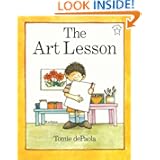
 The Art Lesson
 by
Tomie dePaola loosely chronicles his own experiences in art class as a young child. This is another great book that does not need to be lesson specific as it is more about the value of the artistic experience. A historical author review is a must when reading this book.
 Carl R. Sams
 created this wonderful photographic book,
Stranger in the Woods. The Stranger is a snowman left by two lovely giving children who adorn it with fresh food items to feed the winter inhabitants of the woods. I generally read this during the snowy months of the year to Kinder students. I often use it with a sponge painting snowman project that is later adorned with real buttons, felt, etc. I have also used it with a model magic snowman sculpture project for kindergarten.

Just for fun, there is
Karen Beaumont's I Ain't Gonna Paint No More! This could be used with any lesson on painting when you want to stress the importance of using materials as they are intended.

I like all the books by
Lucy Micklethwait as I transition to a new element of art with Kindergarten students and often use them to review with older students.
I Spy Colors in Art is no exception. I use this one with Kindergarten as they begin color mixing. I want them to see how color is used in art through an exposure to famous works of art. It is also a subtle lesson in art history.

I had the pleasure of meeting
Jerry Pinkney at the Norman Rockwell Museum where I received my signed copy of
The Lion and the Mouse. Pinkney has rewritten
the fables we grew up on and added rich vibrant illustrations. This book is all about the illustrations for me and I use it to help students read the pictures when the focus in on art telling a story.

The delicate watercolor paintings of Robin Brickman in
Pat Lowery Collins book,
I am an Artist are beautiful. I inherited this, also signed, copy from a previous teacher. I understand that Lowery Collins is from Massachusetts and once did a signing in our area. This book is an affirmation in seeing and creating. Its a beautiful book suitable for any grade level.

A fun read for cold season is
Lisa Kopelke's fun little book
Tissue Please. The project is simple, Kindergarten students create a self portrait on a 12'x24' paper. I usually have them draw a large oval head on a skin color, cut it out, glue it on a larger colored paper and use pencil and crayon to add eyes, nose, mouth, ears and hair. Hair could be textural with the use of yarn if time allows. Then they trace their own hand, cut out and glue it in front of the nose and mouth with a tissue fan-folded underneath. It is a visual reminder to cover your mouth and nose when you sneeze!
One more book post to follow in a day or two to complete the list of the books on my bookshelf. I'll add along a few books that I've just purchased and haven't used in the art room, yet


 A Tree for all Seasons by Robin Bernard I use this book with Kinder students as they study trees in early spring. It is a simple project and also the first time I use markers with Kindergarten students. Following along, they color a wide vertical rectangle near the center of their paper using a brown marker. From the top of the rectangle thinner branches of a "Y" are formed. This process continues as the tree grows taller and taller by added the "y" at the end of each new branch. Leaves can be added with paint and fingertips or with Q-tips to complete the tree. I make certain to stress the importance of and add the horizon line. Students are then left to complete the composition making their own choices so that individual creativity occurs.
 Next on my list is Purple, Green and Yellow by Robert Munsch. I think this is one of my favorite all time books and I love to read it out loud to students pausing at the appropriate times to stress events and wait for their reactions. It is such a fun book. I generally use this with Kinders but often will read it to all the younger grades in the same day because it is so enjoyable. I don't always have a lesson that directly relates to the reading of the book and will use it for a reading in day two of a project. I would count this as one of my "must have" books and actually have two copies, one for each building!

 Here is the one I use when introducing Texture: Feely Bugs by David Carter. This book belonged to my grown daughter and has definitely seen wear and tear but is still functional. It is interactive so I generally read each page and invite a great listener to come up and touch the bug and report back to the rest of the group their interpretation of what it feels like. For the project, I use model magic and students discover the texture on the bottom of their shoes. These could be made into pendants with a small hole into the top to string them or a magnet by attaching a magnet to the back with adhesive. I have done the magnets for years. Week two, after the model magic has hardened, they are colored with markers or watercolored. I share with students my hopes that the magnets will proudly display their personal artwork on the home refrigerator.
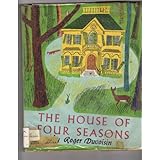 A sculptural house created from a brown lunch bag is the lesson tied to the book A House of Four Seasons by Roger Duvoisin. This book is about the indecision faced by a family when they attempt to purchase paint for their home. Everyone in the family has a strong case for the color of their choice and with four family members, there are four color choices. In the end they reach a compromise that makes everyone happy.


 I like all the books by Lucy Micklethwait as I transition to a new element of art with Kindergarten students and often use them to review with older students. I Spy Colors in Art is no exception. I use this one with Kindergarten as they begin color mixing. I want them to see how color is used in art through an exposure to famous works of art. It is also a subtle lesson in art history.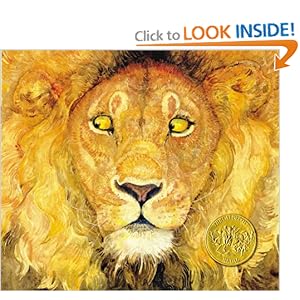


 basic color combinations. We study his transitional styles and talk about his integration of math into his work. Lastly, we share the fact that LeWitt creates the ideas for his works but the process is actually completed by other people. The students find that to be a very fascinating fact.
 Last year I decided to take the papers and use them to extend the lesson and the sculptures are the end produce. The papers are cut into triangular shapes, I created tracers that are used by my students. The triangles are traced on the back of their paper and then cut apart. Using a wood stylist, the triangles are then rolled into paper beads or tubes. The tubes are then glued to form angles. So we have transgressed back to a math connection with the project. Taking two of the tubes at a time, students glue them to form right angles, acute angles and isolates triangles. Every connection must form an angle. The angles are glued to a poster board base about

